Feeds:
Posts
Comments

Jiu jitsu doesn’t just train the body, it also trains the mind.   Training the mind takes many years of consistent practice.

Last Friday, Pedro jr. talked about the mental states of a true warrior,  equanimity, alertness, and readiness.

Equanimity means mental calmness under stress.  Equanimity also means maintaining mental stability, not over celebrating, nor be overcome with grief; ideally in the center.  If the mind entered an extreme emotion, the mind should quickly try to get back to center.   A palm tree, flexible in a hurricane.

Alertness.  In my own words, perception of reality, freeing the mind of chatter and distraction.   Clearly observing the opponent in front of you.  Observing the environment your in.  In an attack situation, being able to evaluating the options based upon immediate observation.  Sparring, knowledging what the arms and legs are doing.

Readiness. Train.Train..Train… Repetition equals muscle memory.

There are ways outside of jiu jitsu where you can improve your mental states.  Equanimity,  alertness, and readiness can be developed by consistent yoga practice.  Yoga means union of the mind and body.   Finding the right yoga studio is a problem.  Stay away from big gyms that treat yoga like an aerobics class. That I don’t recommend.   I recommend the study of the eight levels of yoga called The Eight Limbs. If the yoga studio never heard of this, eight limbs, don’t return. Find another place. Meditation classes can also be helpful to jiu jitsu students.  Finding a good meditation teacher isn’t easy as well. I recommend the study of the Eight Fold Path of Buddha. It’s really scientific and not religious. It’s similar to the eight limbs. Neither the eight limbs nor the eight fold path will contradict your beliefs but improve it. I’m not going to give more information because it’s something you need to research and worthwhile. Maybe your ready or maybe not? Take the time to see for yourself.

October 8, 2013. Miami Herald

” The stand your ground law was criticized after Zimmerman fatally shot 17-year-old Martin in the Orlando suburb of Sanford. Zimmerman, who claimed he was defending himself, was acquitted of second-degree murder in July. Days later protesters demanding changes to the stand your ground law began a 31-day sit-in at the Capitol.

Smith voted against the 2005 bill that created the law, and said that he still believes people should be required to retreat first, if possible, before using force against an attacker. But he said he worked with Simmons on areas where they can agree. Both senators attended hearings around the state to discuss the law.

“As we discussed stand your ground, we found that we have a lot of common ground,” Smith said. “We found that we agreed way more than we disagreed.”

Simmons said he wanted the bill to also clarify a provision of that law that states it doesn’t apply in cases where illegal activity is occurring. Simmons says that the language is intended to keep drug dealers or others committing crimes from using the defense, but some people are interpreting it too broadly.

That includes the argument that parking violations are illegal, or that immigrants that entered the country illegally should not be able to use the stand your ground defense, Simmons said, adding that immigration status shouldn’t be a factor in self-defense cases.”

• This article is from the Miami Herald dated October 8, 2013. For purpose of education and information only.

Read more here: http://www.miamiherald.com/2013/10/08/3677466/senators-approve-tweaks-to-stand.html#emlnl=Afternoon_Update_Newsletter#storylink=cpy

helio challenge throw 2013As I was reviewing advanced moves with a four striped white belt, he told me that he learned a new throw, without any thought, quick speed, and to my complete surprise, I was fully in the air and then crashing on to the mat. As taught, I slapped the mat at the right time. Got up and moved on to another technique.

Getting a good throw feels good, but getting thrown hard and getting up uninjured was a thrill.

This week, in the advanced class, I let myself get thrown five times so as to practice break fall techniques.

Disclaimer, I don’t recommend anyone to be thrown without FULLY knowing how to break a fall.

New students should be tested before taking the throwing class. An instructor should make a new student before class show them a standing side fall, forward, and back break fall.

govt bjj repres in fl 2013

October 1, 2013, at the Newport Beachside Hotel in Sunny Isles Beach, Florida, 300 plus jiu jitsu students in white komonos celebrated the 100th birthday of Grand Master Helio Gracie.  Sadly, as many know, Grand Master Helio Gracie passed away in 2009; however, the memory of Helio, his teachings, and practice of Jiu Jitsu lives on.

The birthday celebration began with awards presented by the City of North Miami Beach which proclaimed October 1st as Helio Gracie Day.  There was another award, presented by a state congressman, a purple belt.  All in all, very good propaganda for jiu jitsu and good representation in government.

Right after the awards was held a special event, the Helio Gracie Challenge, a self-defense techniques contest.  This special event featured five contestants whom were the winners from previous years.  In the end, Roberto Flesishmann won.

Pedro Valente gave an excellent speech on Helio’s ring fights from 1932 to 1936.  Ten fights from the best fighters from the United States, Japan, and Poland.  Impressive was Helio’s tremendous courage to fight incredible opponents.  In post fight interviews with Helio’s opponents, they praised his superior defense.

After the speech was a video presentation by the Valente Brothers, Pedro, Gui, and Joaqium. In the video, they told stories of their experiences with Helio at his home and on the mats.

Finally, a slide presentation of Helio’s amazing life.  The presentation ended with the last time he was seen alive by Pedro.  In his door step, smiling. a hand wave of good-bye.

This week I learned again the Single Collar Grab Defense.

What is the Single Collar Grab Defense?  First of all, this is when the attacker grabs the collar, or shirt, of a victim, but with their elbow bent.  The attacker’s other hand is ready to strike the victim.  This is a bully type attack.  The defense is almost a surprise.   As the attacker grabs the victim shirt, the victim steps wide and across the attacker  while grabbing the shirt grip hand and slapping up the elbow.  The victim’s elbow is tight to the body so that the attacker cannot push the arm down.   Once you step behind, keep hold of the elbow and twist the hand to the shoulder, It is a lot easier to demonstrate than write.

This lesson, when I first learned it,  was the beginning of an awareness that grabbing someone was a bad idea.  All people should be respected.   I started thinking differently about how to conduct myself if I were to become angry.  Grabbing someone is grounds for a fight and could lead to serious injury.

This week we reviewed the standing foot lock.  I like foot attacks because these attacks are a surprise to most opponents,. It should be noted that this attack is banned in the MMA and sport jiu jitsu.

So what is the standing foot lock?  First of all,  the opponent is on their back with legs up in a defensive position called gungoha , in English, sea saw position.   The floor position is a defensive move so as to ward off being mounted and also one can kick the knee of an attacker. This is when you catch the foot of an opponent while standing. The foot is held  in a kimura grip close to the ankle and over the foot arch.  You look over the shoulder and twist  to break the foot.  It is important to pin down the opponents other leg with the knee so as not to get kicked.

This week, we reviewed the closed guard. While the attacker is in the closed guard, it is very difficult to be knocked out, or passed into a side or full mount. The closed guard is mostly a defensive move. However, in a street fight or mma, you could strike the ear. The technique is as follows: start on back, one hand holds the back of the neck and the other arm wraps around outside the bicep, the wrapping arm hand can grab the opponents inside collar. Tuck head in. Legs are locked around the opponents waist/lower back.

While in the guard, you could defend against strikes. However, the main objective is defense and to burn the attackers energy as much as possible.

The higher the belt rank the more they are thinking on passing the guard. It is not a good idea to allow any opponent to remain postured up while your legs are locked for too long. As a jiu jitsu player, How do I break posture and get them into the closed guard? So, the objective is to break posture. Grab the top of the hands quickly, with power pull the hands apart while PULLING down with the legs into the closed guard. Basically grip fighting.

If the opponent stacks you while the legs are locked, swim the arms, and put the attacker in the closed guard.

I

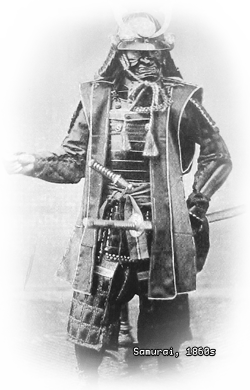
bjj SamuraiWhat is important is the goal, purple belt.  That is what I keep telling my self.  I miss a class or a week because of sickness, family, injury etc.  Organize my thoughts, heal up, fight back the fear, and get back on the path. Stop thinking. One step after the next.

Fall back from the guard or pedalada?

A few weeks ago, I watched a video from Tosh.0, a comedy show, of a street fight between a kick boxer and a guy with no fight experience.  See link.  https://www.youtube.com/watch?v=rYSJWm90YQw    When ever I see a street fight on the news or else where, I like to look at the video to see how a jiu jitsu fighter would handle the attack.

We worked on the fall back from the guard this week, or another way of saying, how to throw an attacker back if they are standing over you.  As the practice attacker, a mistake I was making was standing too far back which would have made a real fall back from the guard difficult.  The attacker must be standing near the arm pits so that the ankles could be easily monkey gripped while the knees push forward on the attackers body which would cause the attacker to fall back.

Back to the video, the inexperienced guy was kicked in the face and was laying in the road, he needed to get to the gungoha position, or in English, sea saw position, a defensive position while on the back.   However, the attacker was actively pursing the defender whom was slightly stunned.  At one point, the attacker looked like he was going to mount the defender but ended up standing over the fallen guy.  I don’t think a throw back from the guard was possible.  I think a jiu jitsu fighter would have tried multiple kicks to the groin/stomach, in bjj, it’s called a pedalada, and then would have try to get back on the feet.   Also, note, the attacker was holding the guy’s arm, there was a possibility of an arm bar.

For the longest time, I have been practicing the shoulder grab self defense incorrectly.  What exactly is the shoulder grab defense?  It is a shoulder dislocating technique against an unsuspecting attacker.

As a practice partner, as the attacker, my first mistake was not grabbing the defending person correctly. Improper grab position. The shoulder grab is closer to the neck than to the bony part of the shoulder.  Second, the grab is an  aggressive attempt to unbalance the defender.   Once the defender maintains base, or regains base, meaning the atttacker can’t drag the defender around, that’s when the move is executed.

Once the defender has gained base, that’s when the defender wraps around the attacker’s grabbing arm and punches down towards the floor.   From the punch, the attacker’s arm is cradled by the punching down arm with an underhand grip by the wrist.  From the wrist grab,   the defender lifts up  with all their body weight to the ceiling.  At a certain point, the attacker’s shoulder should be dislocated.  A mistake I made was cradling the arm on the stomach.  To max leverage don’t cradle the attacker’s arm on the stomach, leave a little space. Second, really punch down with force.  Lastly, cradle the attacker’s arm under the elbow.